IWhy a Stone
A crystal is matter that has made up its mind. In a liquid or a glass the atoms sit where they fell; in a crystal they sit where the lattice says, in rows that repeat, the same to the last atom, for as far as the crystal grows. Quartz is silicon and oxygen arranged in a screw; salt is sodium and chlorine in a cube; diamond is carbon in a lattice so stiff that nothing scratches it. That order is why a crystal has flat faces, why it splits along planes, why it rings, why it bends light in one direction and not another, and why, in a handful of cases, it produces electricity. Everything true about crystals follows from the lattice. So does most of what is believed, though by a longer road.
I make instruments for a practice, the consultation of a board, a pendulum, a planchette, that the sceptics say is the sitter talking to himself and the believers say is something else, and I make them out of stone as well as wood and silver. I do it for three reasons, and I would rather you knew all three. First, the stone is beautiful, and beauty on the table is half the ceremony. Second, the stone has a history: every stone on this page was held by a king, a priest, or a physician before you, for a reason they could name, and that history comes with it. Third, in the case of quartz and its cousins, the stone actually does something when you touch it, which is more than can be said for the plastic pointer, and the something is measurable. What follows is the science first, because it is short; then the history, because it is long; then the stones, one by one; then what I make.
IIQuartz, and Electricity in Both Directions
In 1880 two brothers in Paris, Jacques and Pierre Curie, aged twenty-four and twenty-one, laid a slice of quartz between two sheets of tinfoil, put a weight on it, and measured a charge on the foil. Take the weight off and the charge reversed. They tried tourmaline, topaz, cane sugar, and Rochelle salt, and they found the rule: any crystal whose lattice has no centre of symmetry will do it, because squeezing such a lattice pushes its positive and negative atoms apart by a little and the whole slab becomes, for an instant, a battery. They named it from the Greek for press: piezoelectricity. The next year the physicist Gabriel Lippmann pointed out that the effect had to run backwards, and the Curies showed that it did: put a voltage across the slab and the slab changes shape. Press it and it speaks; speak to it and it moves.
The amount is small. A cubic centimetre of quartz pressed with the weight of a hand gives a few volts across its faces and almost no current; you cannot light a lamp with it. What you can do is make it ring. A quartz plate cut to a certain thickness and driven by a voltage vibrates at a frequency set by nothing but its size and the speed of sound in quartz, and it does so more steadily than any pendulum, spring, or electronic circuit ever built. Paul Langevin used the effect in 1917 to make the first sonar, sending sound into the Channel to find submarines; Walter Cady in 1921 built the first quartz oscillator; Warren Marrison at Bell Labs in 1927 built the first quartz clock, accurate to a second a month; and in 1969 Seiko put a quartz tuning fork vibrating 32,768 times a second into a wristwatch, the Astron, and the mechanical watch industry of Switzerland fell over. Every telephone, radio, computer, and car built since has a sliver of quartz in it keeping time. When you press the plastic igniter on a gas stove, you are squeezing a piezoelectric crystal hard enough to make the spark. Both directions, every day.


Why quartz and not glass? Because glass is silica with no lattice, and a lattice with a centre of symmetry, like salt, gives no effect either: squeeze it and the pluses and minuses move together. Quartz is silica whose silicon-oxygen tetrahedra wind round the long axis of the crystal in a spiral, left-handed or right-handed, and a spiral has no centre. Press across it and the two ends of every tetrahedron move by different amounts. That handedness is also why quartz rotates polarised light, and why a right-handed crystal and its mirror image are two different things, like two gloves. Nature does not care which it makes; about half of all quartz is each.
There is a second effect, older in the record. Warm a tourmaline and its ends become charged: pyroelectricity, which the Dutch noticed in the 1700s when tourmalines from Ceylon drew the ash out of their pipes, and which Theophrastus may have been describing in 315 BC when he wrote that the lyngourion attracted straw. And a third, oldest of all: rub amber and it picks up a thread. The Greeks called amber elektron, and the word electricity is the word amber with a Latin ending. Three stones, three electrical effects, all known to people who had no idea what electricity was, all sold in shops today as ‘energy stones’ by people who mostly have no idea either. The difference between me and them is that I can show you.
And two honest notes. A quartz point sitting on a shelf produces nothing; the effect needs pressure or voltage, and stops when they stop. And no measurement has ever found a quartz crystal doing anything at a distance to a human body, a room, or a question. What it does, it does when pressed, on the table, under the hand. That is exactly where I put it.


IIIThe Pyramids, the Mica, and the Granite
There is a story told in the crystal trade, and I was told it too, that a layer of mica lies hidden beneath the King’s Chamber of the Great Pyramid at Giza, brought from South America, invisible, and put there for reasons that have to do with electricity. I went looking for it, as I go looking for everything on these pages, and here is what the record actually says, which is stranger than the story and better documented.
The mica is real, and it is in a pyramid, but the pyramid is in Mexico. At Teotihuacan, the city of the gods forty miles from Mexico City, the archaeologist Leopoldo Batres, excavating the Pyramid of the Sun in 1906, found sheets of mica laid between the stone courses of its fifth level, and stripped most of them out and sold them. In the 1980s, beside the Avenue of the Dead, excavators found a small building now called the Mica Temple, under whose floor two sheets of mica some ninety square feet each had been laid flat, one on top of the other, and covered with stone, so that no one walking above would ever see them. The mica was analysed and reported to have the trace signature of deposits in Brazil, two thousand miles away, though that analysis has never been published in a form anyone can check. Mica occurs in Mexico; someone chose not to use it. Nobody knows why the sheets are there. They were not decorative, because they were hidden. They were not structural, because mica is soft. What mica is, uniquely among common minerals, is an electrical insulator and a dielectric that does not burn, does not conduct, does not absorb water, and holds a charge across itself: the material of every early capacitor and every radio-valve spacer, the stove-window that will not crack in the fire. The people who wrote the story about Giza had the wrong pyramid and the right mineral.


Now Giza. The King’s Chamber is built of about a hundred blocks of red granite quarried at Aswan, five hundred miles up the Nile, each weighing twenty-five to eighty tons, roofed with nine granite beams of up to eighty tons each and five more granite chambers stacked above them. There is no mica layer beneath it that any survey has found, and the chamber has been surveyed with everything from cosmic-ray muons to microgravimetry. But Aswan granite is a third quartz, a third feldspar, and the rest mica and hornblende, and the quartz in it is the same piezoelectric quartz the Curies squeezed. A room walled, floored, and roofed in quartz-bearing rock, under six million tons of limestone pressing down on it, is, in the strictest physical sense, a room whose walls are under constant piezoelectric stress. Whether that means anything is another question. The engineer Christopher Dunn argued in 1998 that it meant the pyramid was a machine; Egyptologists reply that the Egyptians chose granite for the king’s chamber because it was the hardest stone they had, and that the sarcophagus is granite for the same reason. Both may be true. The Egyptians certainly did not know the word piezoelectric. They also did not know why quartz was the stone of the sun and granite the stone of eternity, and chose them anyway.


As for electrolysis, the third word in the story: there is one ancient object that has been called a battery, the ‘Baghdad battery’, a clay jar with a copper cylinder and an iron rod found near Baghdad in 1936 and dated to the Parthian period, some two thousand years after the pyramids; it may have been a battery, and it may have been a jar for scrolls, and it has nothing to do with Giza either way. I record it so that you will have heard the whole story from me and not from someone selling a pyramid-shaped orgone generator. What is true is enough: the largest building of the ancient world has a heart of quartz, and a city in Mexico hid sheets of the best insulator on earth under its floors, and nobody alive can tell you why.
IVA History of Powerful Stones
People have carried stones for longer than they have carried anything else. The children at Sungir, thirty-four thousand years ago, were buried with beads by the thousand; the Mesolithic hunters of the Baltic hung amber round their necks nine thousand years ago and cut animals into it; ochre, which is powdered hematite, is on the walls of every painted cave and was rubbed into the bodies of the dead before there were walls. The stone was not decoration. It was the first thing a person owned that would not rot, and so the first thing that could carry a meaning past a life.


The first civilisations ranked their stones and knew where they came from. Sumer’s lapis came two thousand miles from Badakhshan and went into the eyes of gods and the headdresses of queens; Egypt’s turquoise came from Sinai, its carnelian from the eastern desert, its lapis from the same Afghan valley by way of everybody in between; the Indus cities made etched carnelian beads that turn up in Mesopotamian graves. The Egyptians wrote down what each stone was for. The heart scarab of green stone was laid over the heart with a spell from the Book of the Dead carved on it, asking the heart not to testify against its owner; the tyet knot of red carnelian went at the throat; the wedjat eye in lapis on the wrist. Tutankhamun went into the ground wearing, by count, several thousand stones, each in its place for a reason.


China chose jade, and never changed its mind. The Liangzhu culture was carving bi discs and cong tubes from nephrite by 3300 BC; the Han princes were sewn into suits of jade plaques to keep their bodies whole; Confucius listed the virtues of jade, eleven of them, as the virtues of a gentleman; and the jade cicada was laid on the tongue of the dead to promise rebirth. On the other side of the world the Olmec and the Maya valued jade above gold and buried their kings in jade masks, and the Aztecs, who could have had any stone in Mexico, chose obsidian for their mirrors and their knives, and turquoise mosaic for the faces of the gods.
The Hebrew Bible gave the West its list. Exodus 28 describes the breastplate of the high priest, the hoshen: twelve stones in four rows, in gold settings, one for each tribe of Israel, with the tribe’s name engraved on it. The Hebrew names have been argued over for two thousand years and no two translations agree, but the list, the sardius, topaz, carbuncle, emerald, sapphire, diamond, ligure, agate, amethyst, beryl, onyx, and jasper of the King James, became the foundation stones of the New Jerusalem in Revelation, the twelve stones of the apostles, the twelve of the months, and at last, by way of a Polish jewellers’ list of 1912, the birthstones on the chart in every jeweller’s window.
The Greeks wrote the first mineralogy. Theophrastus, Aristotle’s pupil, wrote On Stones about 315 BC, and in it are the first descriptions of the properties of stones that can be checked: that some are fusible and some not, that the lyngourion attracts straw, that a certain stone, when burned, gives a smell of sulphur. Pliny the Elder, four centuries later, filled the thirty-seventh book of his Natural History with gems, most of it wrong and all of it read for the next fifteen hundred years: that rock crystal was ice frozen past thawing, that amethyst prevented drunkenness, that the emerald rested the eyes, that opal was the most precious stone of all. Every medieval lapidary is Pliny with saints added.


The Middle Ages made the lapidary a genre. Marbode, Bishop of Rennes, wrote his Liber lapidum in Latin verse around 1090, sixty stones with their virtues, and it was copied in every monastery in Europe; Hildegard of Bingen, in her Physica of about 1150, gave the medical uses of twenty-six stones, sapphire for the eyes and emerald for the heart, and prescribed them laid on the body or steeped in wine; Albertus Magnus, the greatest scientist of his century, wrote a book on minerals that took the virtues seriously and the astrology more so. The bishop’s ring was amethyst; the king’s crown held sapphires against treachery; every pilgrim who could afford it carried a stone against the plague. Then the Renaissance began to test the claims and the Enlightenment to laugh at them, and by 1800 the virtues of stones had been pushed out of the universities and into the countryside, where they waited.


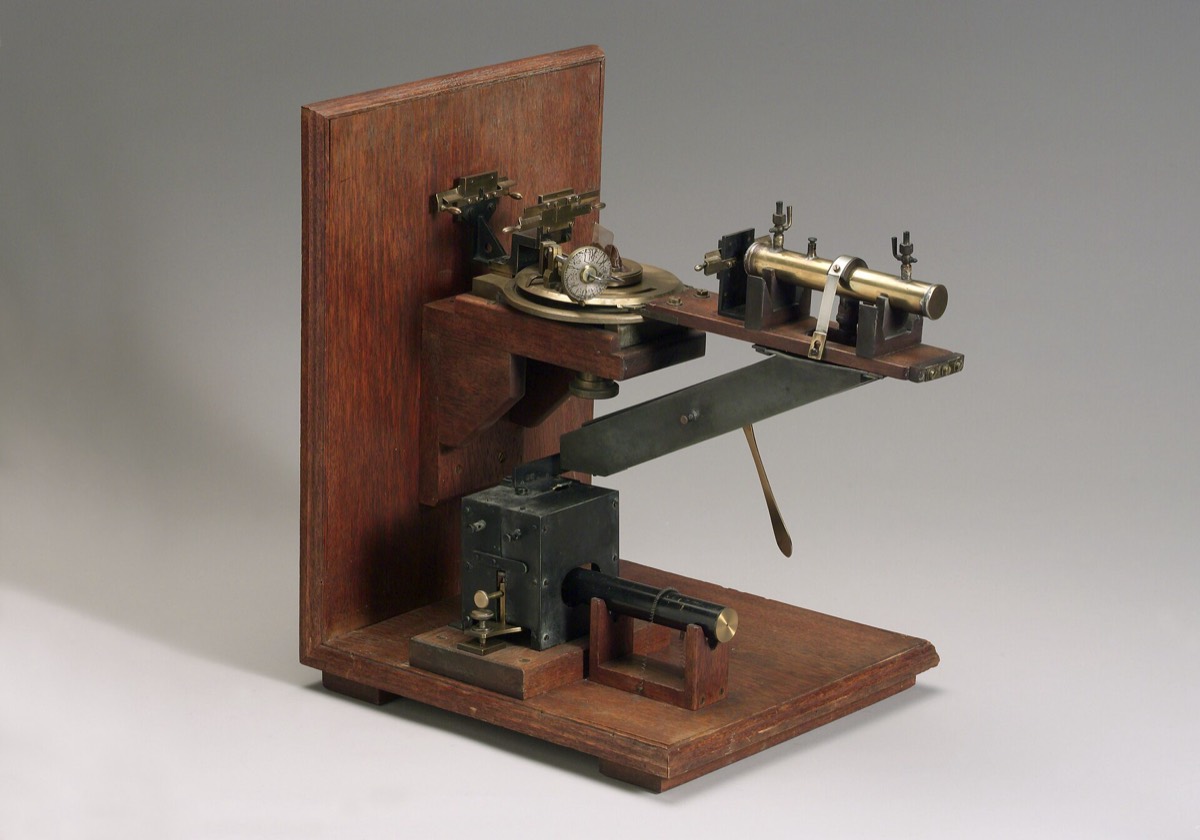
Science took the stones back in the nineteenth century, one property at a time. Friedrich Mohs ranked them by hardness in 1812; René Just Haüy had already shown, in 1784, that a crystal’s shape came from the stacking of identical blocks; the Curies found the electricity in 1880; Max von Laue shot X-rays through a crystal in 1912 and got a pattern of spots that proved the lattice was real, and the Braggs, father and son, used the pattern the next year to measure the distance between the atoms and won the Nobel Prize for it in 1915. From then on a crystal was a solved thing: its structure could be drawn, its properties predicted, its faults explained. And from then on, curiously, the belief in the virtues of stones, which had lived in cottages for a century, began to come back into the towns, through Edgar Cayce’s readings in the 1920s, through the theosophists, and at last, in the 1980s, through a wave of books that made ‘crystal healing’ a phrase and quartz points a commodity. There are now more crystal shops in America than there were in the whole of the Middle Ages, and almost none of them can tell you why quartz rings.

VThe Lexicon: Fifty-Two Stones
What follows is the reference I wish I had been given when I started. For each stone: what it is, chemically and crystallographically; how hard it is and why that matters on a board that is used; where it comes from; what it has done in history; what is believed of it; what I use it for; and which kit it goes into. The chemistry is checkable. The lore is reported, not endorsed, and it is reported in full because it is part of the stone. Where a stone on the market is routinely heated, dyed, or irradiated, I say so, and I say what I sell.
Quartz · Amethyst · Citrine · Rose quartz · Smoky quartz · Rutilated quartz · Herkimer diamond · Tourmaline · Black tourmaline · Lapis lazuli · Malachite · Azurite · Chrysocolla · Turquoise · Obsidian · Labradorite · Moonstone · Sunstone · Selenite · Fluorite · Calcite · Hematite · Pyrite · Carnelian · Agate · Chalcedony · Onyx · Jasper · Bloodstone · Tiger’s eye · Jade: nephrite and jadeite · Garnet · Emerald · Aquamarine · Ruby · Sapphire · Topaz · Peridot · Opal · Kyanite · Celestine · Apatite · Lepidolite · Muscovite · Amber · Jet · Shungite · Sodalite · Charoite · Rhodochrosite · Ametrine · Libyan desert glass
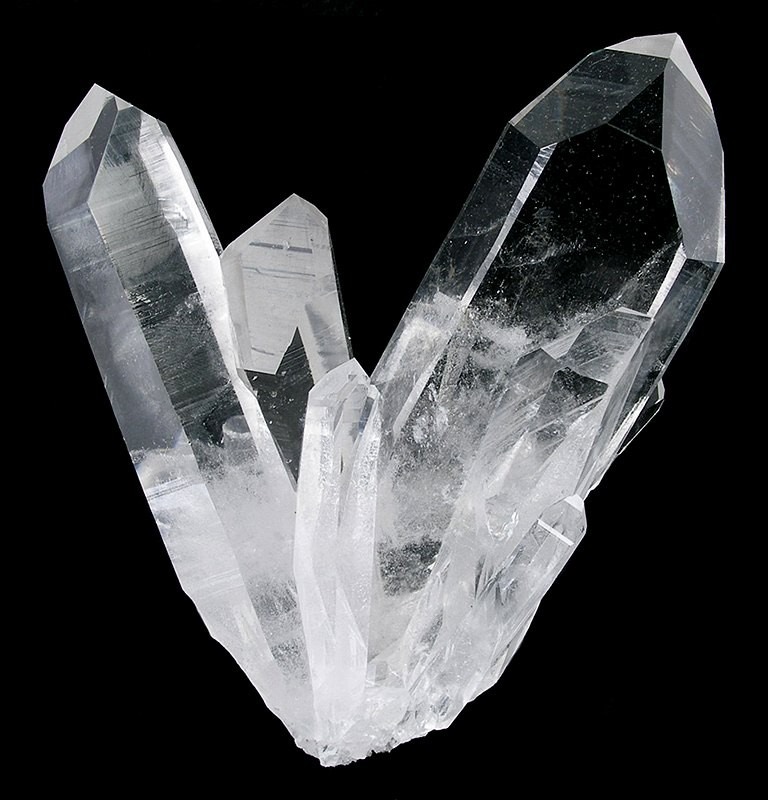
Quartz, rock crystal
Colourless when pure; the commonest mineral on the continents after feldspar. Arkansas, Brazil, the Alps, Madagascar; everywhere.
History. Krystallos, ‘ice’, to the Greeks, who believed it was water frozen so hard it would never thaw; Pliny repeats it. Roman ladies cooled their hands on crystal balls in summer; Anglo-Saxon women were buried with them; the medieval Church set relics behind it because it was the one transparent stone that was also incorruptible. The Curie brothers found its electricity in 1880 and the twentieth century built its clocks on it.
Lore. The master stone: amplifier, clarifier, memory, and the one every other is said to be programmed through.
In my instruments. The lens over every letter, the point at every pivot, the index of every dial. A quartz point under the pivot of a board is the only thing on the table that produces a charge when it is pressed.
Kits. The heart of every kit; the Piezo Kit is two of them.
Photo Robert M. Lavinsky, CC BY-SA 3.0.
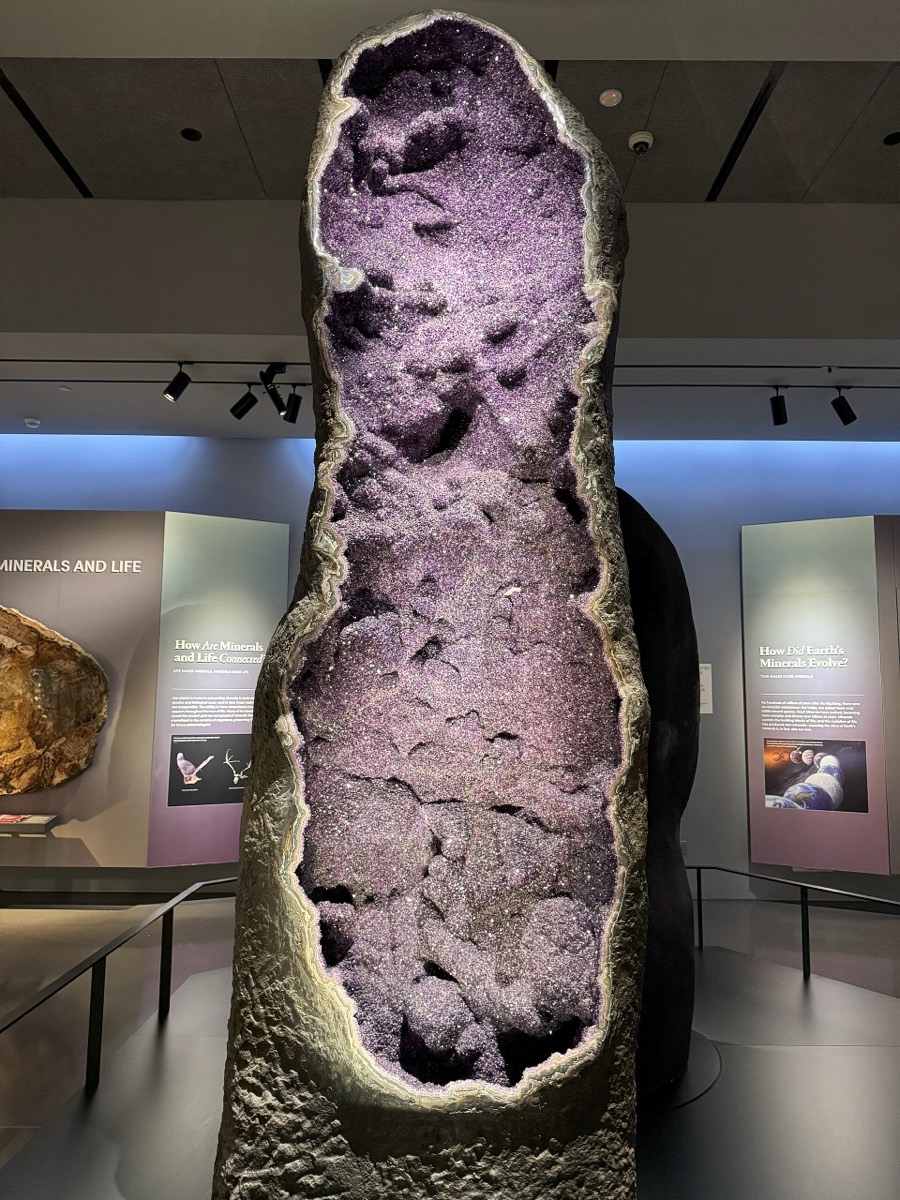
Amethyst
Violet from iron and natural radiation; heats to citrine. Uruguay, Brazil, Zambia, Thunder Bay.
History. Amethystos, ‘not drunk’: the Greeks cut wine cups from it and Pliny says it was worn against hangovers. The stone of bishops since the Middle Ages, and of royalty until Brazil’s mines made it common in the nineteenth century.
Lore. Sobriety, protection, the third eye, sleep; the stone most often chosen for a first pendulum.
In my instruments. Pendulum bobs, and the violet band of the chakra board.
Kits. The Sitter’s Kit; the Pendulum Seven.
Photo Vicpeters, CC BY 4.0.

Citrine
Yellow to amber; most on the market is heated amethyst, which is honest if declared. Mine is declared. Brazil, Bolivia (with amethyst, as ametrine), the Urals.
History. Rare in nature and rarely distinguished from topaz before the eighteenth century; the ‘merchant’s stone’ of the Victorian jewellers, who set cairngorm and citrine in Scottish silver.
Lore. Abundance, warmth, the solar plexus; the stone that is said never to need cleansing.
In my instruments. Pendulum bobs; the yellow band of the chakra board.
Kits. The Pendulum Seven.
Photo Paweł Maliszczak [hardleo.com], CC BY-SA 4.0.

Rose quartz
Pink from trace titanium or microscopic fibres; rarely forms crystals, usually massive. Brazil, Madagascar, South Dakota.
History. Beads of it are found in Mesopotamia from 7000 BC; the Romans and Assyrians made seals of it. Its association with love is a modern one, but the stone is older than most gods.
Lore. The heart, love, self-forgiveness; the stone most given.
In my instruments. Spheres for pendulums, since it does not form points; the green-and-pink of the heart band.
Kits. The Pendulum Seven; the Sitter’s Kit.
Photo Parent Géry, CC BY-SA 3.0.

Smoky quartz, cairngorm, morion
Brown to black from aluminium and natural radiation in the granite it grows in. The Cairngorms, the Alps, Brazil, Colorado.
History. The national stone of Scotland, set in kilt pins, sgian-dubh hilts, and the pebble brooches of the Victorian Highland revival; the Alpine crystal-hunters’ prize; the Chinese made spectacle lenses of it in the twelfth century.
Lore. Grounding, protection, the removal of what does not belong to you; the stone for the end of a session.
In my instruments. The pendulum for closing a sitting; the dark points at the outer marks of a board.
Kits. The Grounding Kit.
Photo James St. John, CC BY 2.0.
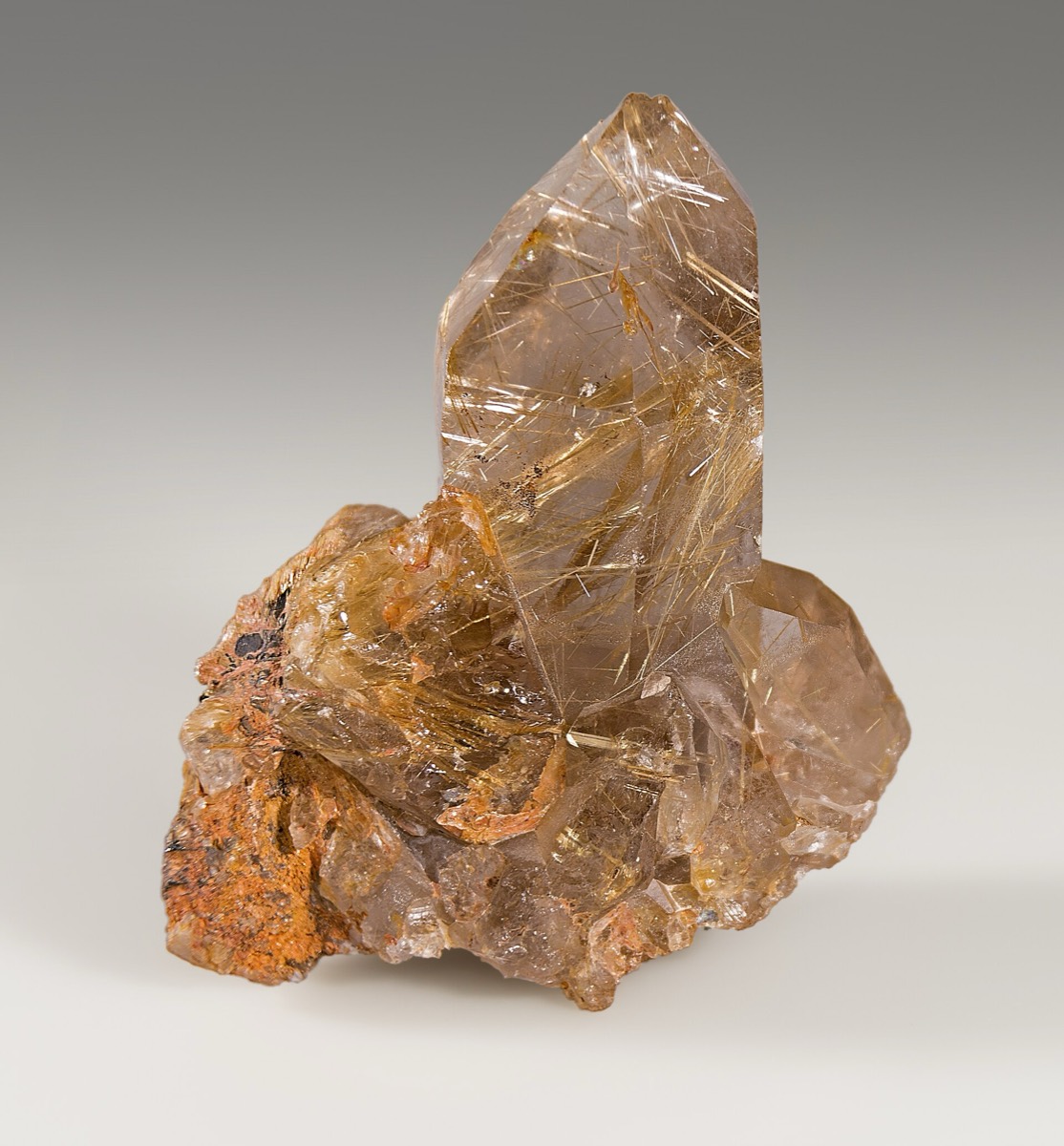
Rutilated quartz
Clear quartz shot through with golden needles of rutile. Brazil, Madagascar.
History. ‘Venus’s hair’ to the eighteenth-century collectors, ‘arrows of love’ to the Victorians; a single crystal is a small map of a lightning strike.
Lore. Illumination, speed, the amplifier’s amplifier.
In my instruments. The finest pendulum bob I cut, and the pivot stone for a board that is to be looked at.
Kits. By enquiry.
Photo Didier Descouens, CC BY-SA 3.0.
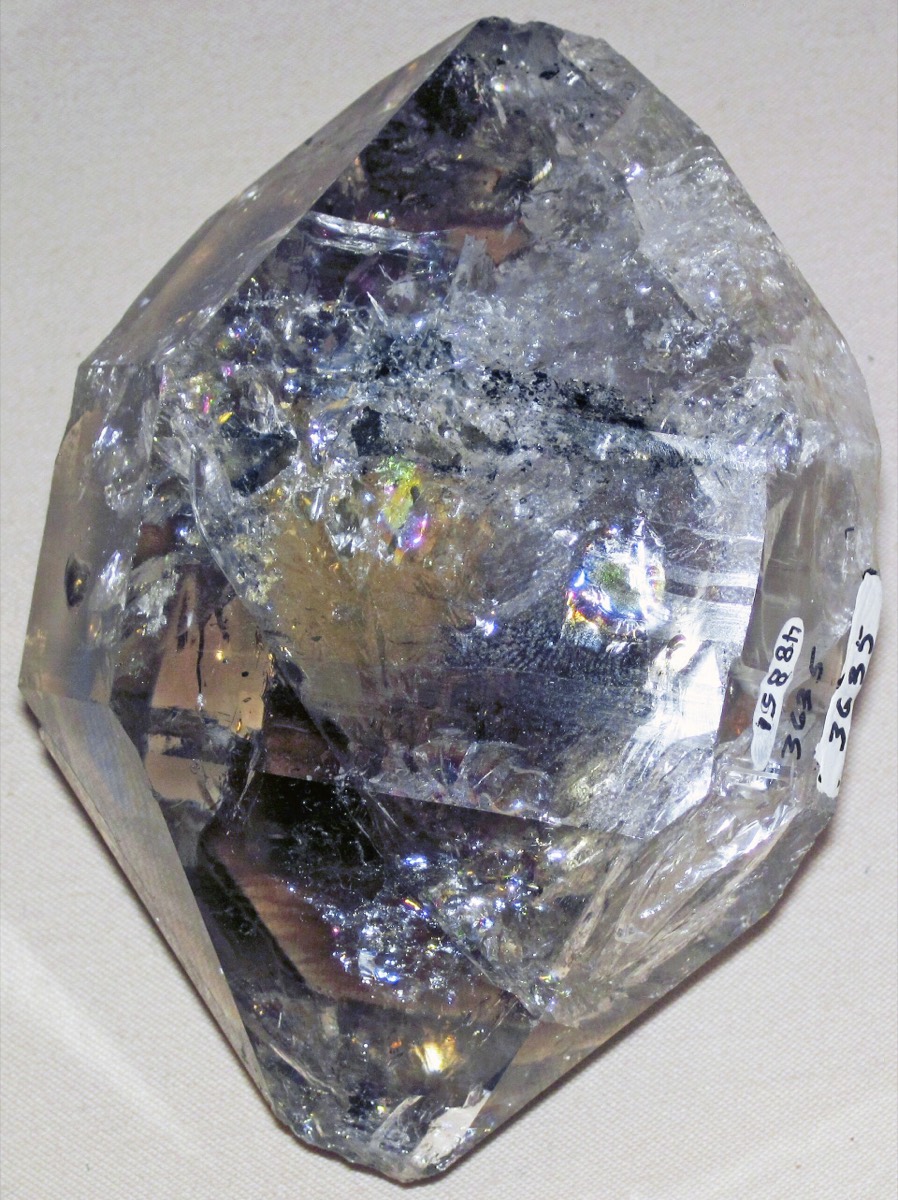
Herkimer diamond
Water-clear quartz that grew free in cavities, terminated at both ends. Herkimer County, New York.
History. Known to the Mohawk, sold by the bushel to Victorian tourists, and still dug by hand from the dolostone with a sledgehammer.
Lore. Dream recall, attunement, the crystal that needs no cutting.
In my instruments. Set whole, as the finial of a pendulum or the eye of a planchette.
Kits. The Piezo Kit’s second stone.
Photo James St. John, CC BY 2.0.

Tourmaline, elbaite
Every colour, often several in one crystal; the ‘watermelon’ is pink inside green. Maine, Brazil, California, Afghanistan.
History. Dutch traders brought it from Ceylon in the 1700s and noticed that a warm crystal drew ash from their pipes: the pyroelectric effect, and the first electrical property of any stone to be noticed after amber. Theophrastus may have described it as the lyngourion two thousand years earlier.
Lore. Balance, the joining of opposites, protection.
In my instruments. The coloured indices of a dial; pendulum bobs for those who want a stone with an electrical history of its own.
Kits. The Board-Maker’s Set.
Photo James St. John, CC BY 2.0.
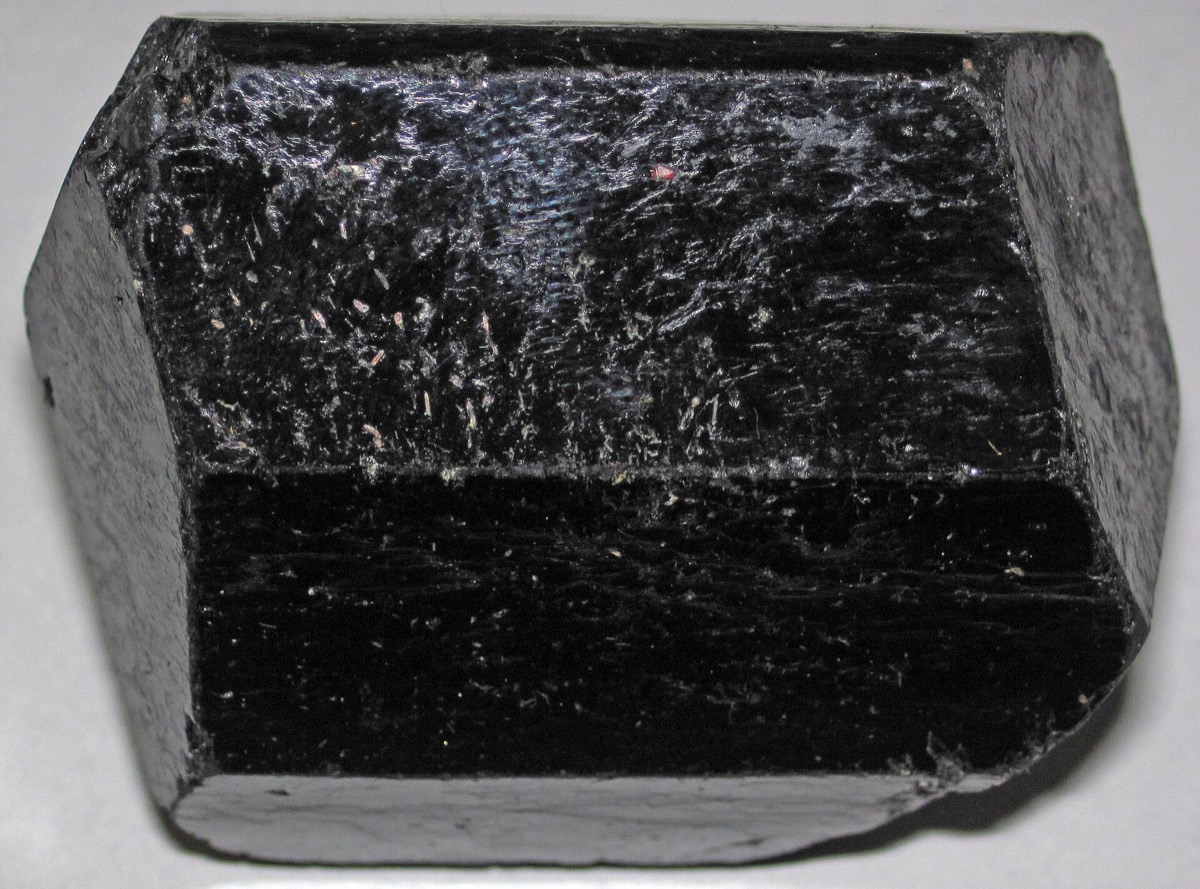
Black tourmaline, schorl
Black from iron; the commonest tourmaline. Everywhere granite is; Brazil, Namibia, Maine.
History. The German miners called it schorl in the 1400s; it is pyroelectric and piezoelectric like its coloured cousins, and was the black stone in a hundred Victorian mourning brooches.
Lore. The great protective stone: the one placed at the door, the corners, and the base of the board.
In my instruments. Feet and corner-stones for boards; the ‘no’ stone at the ends of a yes/no arc.
Kits. The Sitter’s Kit; the Grounding Kit.
Photo James St. John, CC BY 2.0.

Lapis lazuli
Ultramarine blue with flecks of gold pyrite; the pigment of the medieval Virgin’s robe. Sar-e-Sang, Badakhshan, Afghanistan, mined for 6,000 years; Chile.
History. The stone of Sumer and Egypt: the headdress of Queen Puabi at Ur, the eyebrows of Tutankhamun’s mask, the scarabs on his pectoral; ground to ultramarine, it cost more than gold, and Vermeer went into debt for it. Every piece in the ancient world had walked two thousand miles from one valley in the Hindu Kush.
Lore. Truth, the third eye, royalty, the sky brought down.
In my instruments. The pivot disk of the Vesica Board; inlay for the sky and the eye.
Kits. The Board-Maker’s Set; the Twelve Stones.
Photo James St. John, CC BY 2.0.
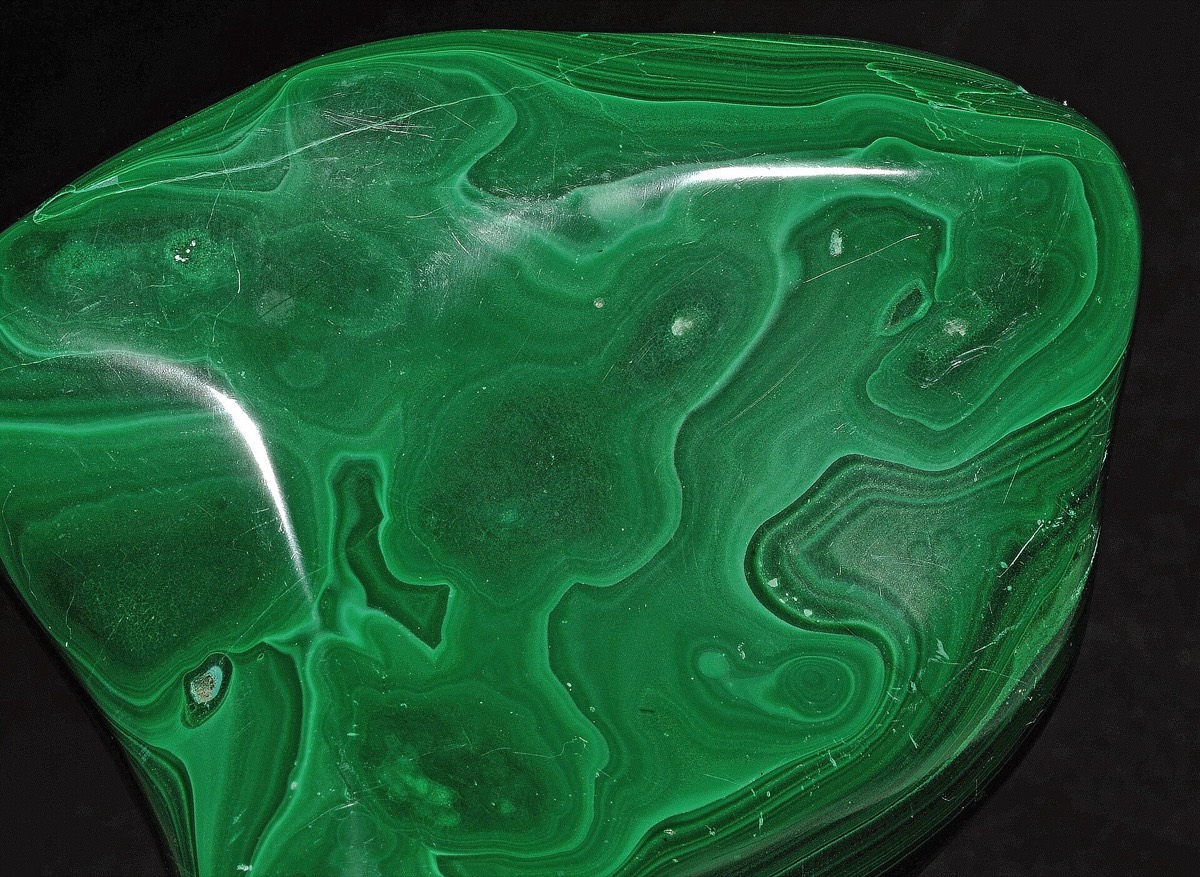
Malachite
Banded green copper carbonate; cut through, a target of rings. Katanga, the Urals, Arizona.
History. The Egyptians ground it for eye-paint five thousand years ago and mined it in Sinai; the Russian tsars veneered whole rooms with it; it is the ore from which the first copper was smelted, which makes it the stone at the beginning of metal.
Lore. Transformation, protection of travellers and children; the stone that is said to break to warn you.
In my instruments. Inlay in bands and disks, sealed, since its dust is copper; the green band of the chakra board.
Kits. The Board-Maker’s Set.
Photo Parent Géry, CC BY-SA 3.0.

Azurite
Deep blue copper carbonate, often growing with malachite. Morocco, Arizona, Namibia.
History. The blue of medieval painting before ultramarine could be afforded; slowly turns to malachite, which is why the skies in some old altarpieces are now green.
Lore. Insight, the opening of the inner eye.
In my instruments. Small inlays only; too soft to bear a pendulum.
Kits. By enquiry.
Photo Ivar Leidus, CC BY-SA 4.0.

Chrysocolla
Turquoise-blue to green. Arizona, Congo, Israel.
History. Theophrastus names it; the goldsmiths of antiquity used it as solder, which is what its name means.
Lore. Communication, calm, the throat.
In my instruments. Small inlays.
Kits. By enquiry.
Photo Naturalis Biodiversity Center, CC0.

Turquoise
Sky-blue to green; the matrix is the host rock. Sinai, Persia, Arizona, New Mexico.
History. Mined by the Egyptians in Sinai from 3000 BC and set in Tutankhamun’s jewels; the Persians’ pirouzeh, ‘victory’; the stone of the American Southwest, where the Pueblo and Navajo smiths set it in silver and the Aztecs made mosaic masks of it.
Lore. Protection, especially in travel; the stone that changes colour to warn its wearer.
In my instruments. Set in silver bezels as the pivot of a board, never glued.
Kits. The Twelve Stones.
Photo W.carter, CC BY 4.0.

Obsidian
Black; snowflake, mahogany, rainbow, and gold-sheen varieties. Mexico, Armenia, Oregon, Iceland.
History. The first mirror. The Aztecs polished it into the black mirrors of Tezcatlipoca, Smoking Mirror, and Dr Dee’s Aztec mirror in the British Museum is one; obsidian blades are sharper than steel scalpels and are still used in surgery.
Lore. Truth-telling, the shadow, the scrying stone; not a comfortable stone.
In my instruments. Planchettes in obsidian; the black mirror sold with my scrying kits.
Kits. The Scrying Kit.
Photo Mike Davis, CC0.
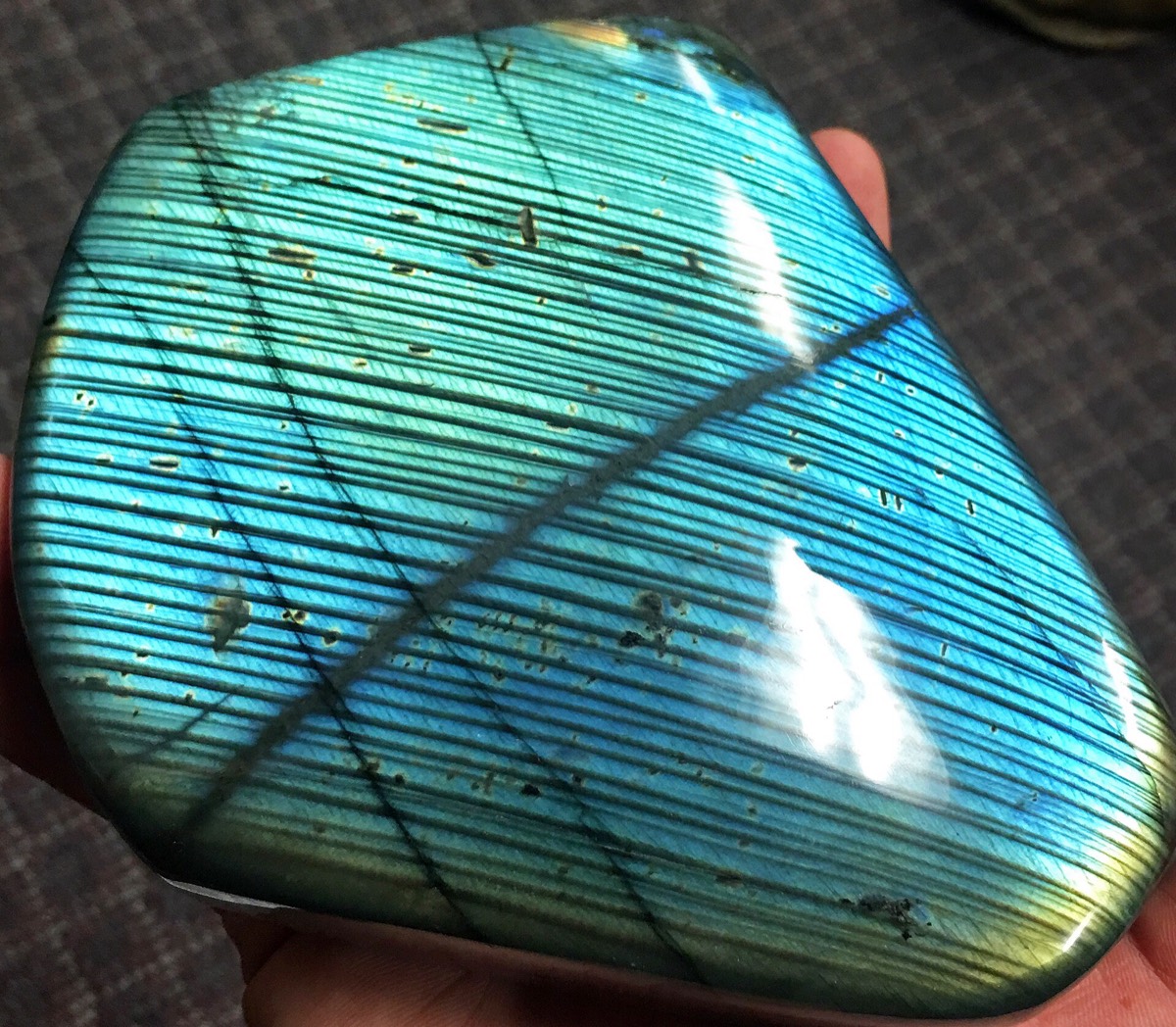
Labradorite, spectrolite
Grey until it flashes blue, green, and gold: labradorescence, from light interfering in layered feldspar. Labrador, Madagascar, Finland.
History. Named for the Labrador coast where the Moravian missionaries found it in 1770; the Inuit said the northern lights were trapped in it.
Lore. The unseen, intuition, the stone of the medium.
In my instruments. Pendulum bobs; the flash under a lens is the best argument for a stone I know.
Kits. The Pendulum Seven; the Sitter’s Kit.
Photo James St. John, CC BY 2.0.

Moonstone
The blue sheen, adularescence, from light scattering between layers of two feldspars. Sri Lanka, India, the Adula Alps.
History. Pliny thought its glow waxed and waned with the moon; the Romans and the Art Nouveau jewellers loved it equally.
Lore. The moon, intuition, the feminine, new beginnings.
In my instruments. Pendulum bobs; the pivot of a board made for a woman.
Kits. The Pendulum Seven.
Photo Wouter Hagens, CC BY-SA 4.0.

Sunstone
Orange with a glitter of metallic inclusions. Oregon, Norway, India.
History. The sólarsteinn of the sagas may have been Iceland spar rather than this; either way, the Vikings navigated by a stone that read the sky.
Lore. Vitality, leadership, the sun.
In my instruments. The orange band of the chakra board.
Kits. By enquiry.
Photo James St. John, CC BY 2.0.
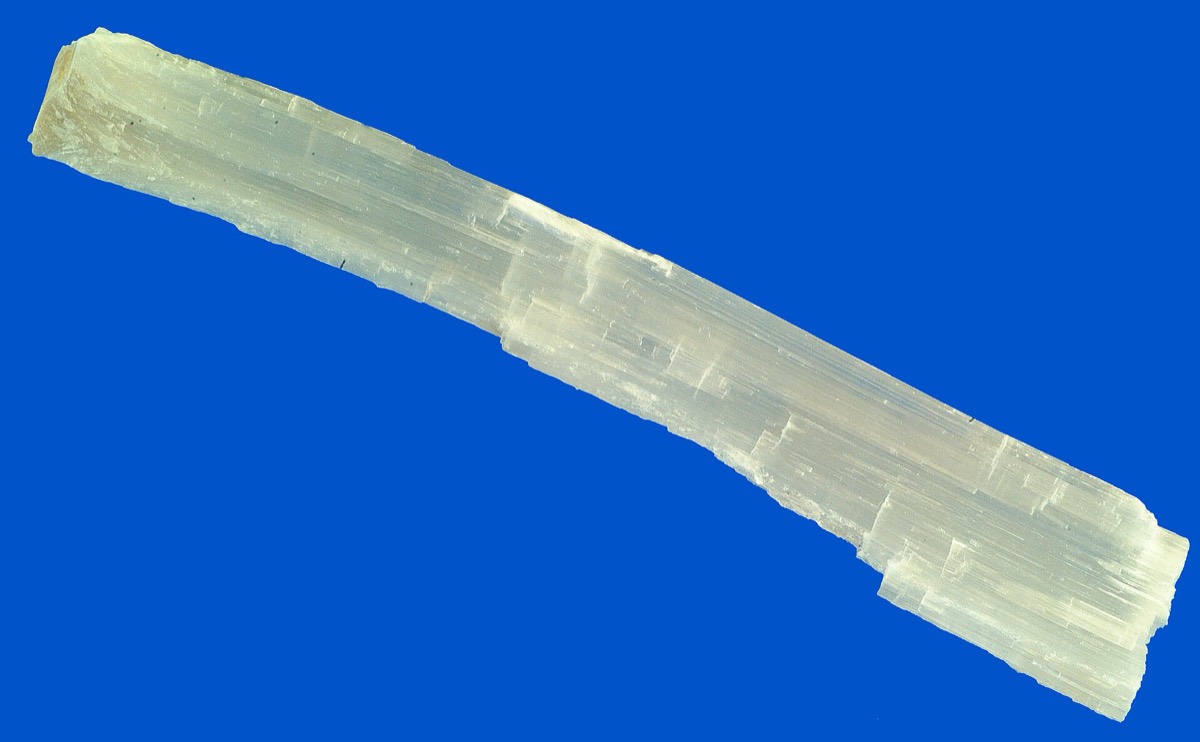
Selenite, gypsum
Colourless, pearly; the giant crystals of Naica are eleven metres long. Naica, Mexico; Morocco; Utah.
History. Named for the moon; the Romans glazed windows with it; Naica’s Cave of Crystals, found in 2000, holds the largest crystals on earth.
Lore. Cleansing, light, the stone that clears other stones.
In my instruments. Never as a bob, because a fingernail scratches it; as the wand laid across a board between sittings.
Kits. The Sitter’s Kit.
Photo Twyla Baker, CC0.

Fluorite
Every colour, often banded; fluoresces, and gave the word its name. Derbyshire, China, Illinois, Spain.
History. The Romans’ murrhine cups; Blue John of Derbyshire; the flux of the ironmasters; the mineral that gave English the words fluorescence and fluorine.
Lore. Focus, order, the mental body.
In my instruments. Inlay in bands; the octahedra as the markers on a percentage arc.
Kits. The Board-Maker’s Set.
Photo Amy M Lavine, CC BY-SA 4.0.

Calcite, Iceland spar
Colourless; splits light in two, birefringence. Iceland, Mexico, everywhere.
History. Bartholin described the double image in 1669 and Huygens explained it; the Viking sunstone was probably this; Newton’s and Fresnel’s optics were worked out on it.
Lore. Amplification, the stone of study.
In my instruments. The lens of a planchette, when a client wants a doubled letter.
Kits. The Piezo Kit’s third stone, for the demonstration of light.
Public domain, Furrfu.

Hematite
Steel-grey with a red streak; heavy. Brazil, Cumbria, Elba, Michigan.
History. The red ochre of every cave painting is powdered hematite; the Greeks named it for blood; the Victorians cut it into intaglios and mourning beads.
Lore. Grounding, blood, protection; the heaviest bob there is short of metal.
In my instruments. Pendulum bobs when weight is wanted from a stone; the feet of a stone planchette.
Kits. The Grounding Kit.
Photo Robert M. Lavinsky, CC BY-SA 3.0.

Pyrite
Brass-yellow cubes and pyritohedra. Navajún, Spain; Peru; Illinois.
History. Fool’s gold; struck with flint, it was the fire-stone of prehistory and the wheellock pistol; the Incas polished it into mirrors.
Lore. Prosperity, will, shielding.
In my instruments. Cubes as the corner-stones of a board; a pyrite sun as a pivot.
Kits. The Board-Maker’s Set.
Photo Rama, CC BY-SA 3.0 fr.

Carnelian, sard
Orange-red; heated to deepen. Gujarat, Yemen, Brazil.
History. The stone of the Indus and of Egypt: the etched carnelian beads of Harappa were traded to Ur and to Egypt in 2500 BC; the Egyptians carved the tyet, the knot of Isis, from it and laid it on the mummy’s throat. Roman signet rings; the Prophet’s ring was carnelian.
Lore. Courage, vitality, the sacral; the stone of the voice.
In my instruments. The orange band of the chakra board; inlay letters on dark wood.
Kits. The Twelve Stones.
Photo Hyperdeath, CC BY-SA 4.0.
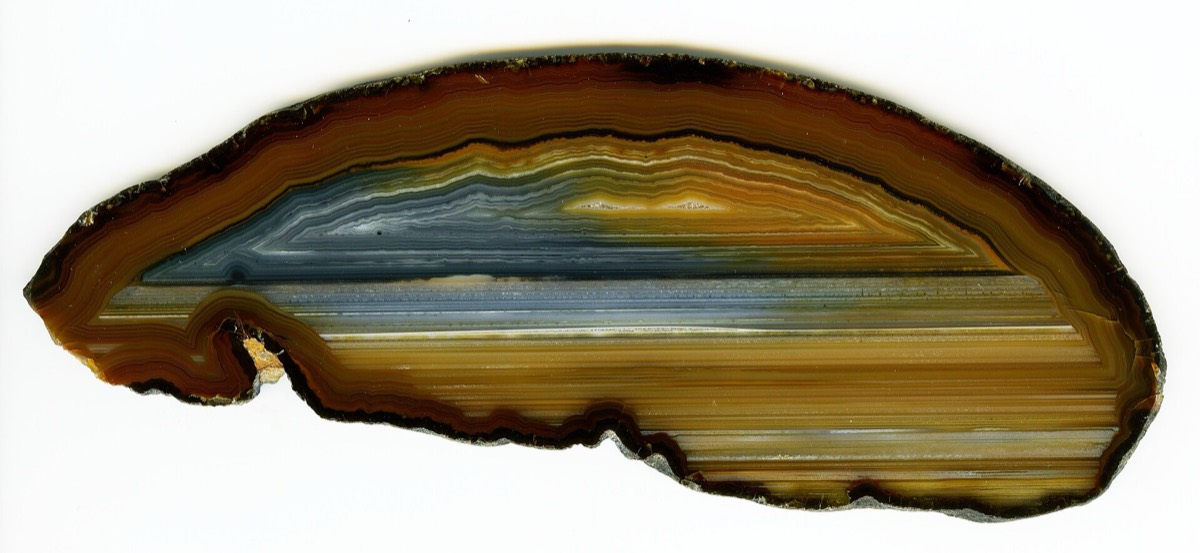
Agate
Banded in every colour; named for the river Achates in Sicily. Idar-Oberstein, Brazil, Uruguay, Montana.
History. Theophrastus names it; the Sumerians cut cylinder seals from it; Idar-Oberstein has cut it since the 1400s and dyed it since the 1800s. A slice is a record of the cavity it filled, layer by layer.
Lore. Stability, the stone of the cautious.
In my instruments. Slices as the dials of a Spiritoscope; the letters of an alphabet board in contrasting bands.
Kits. The Board-Maker’s Set.
Photo Delphine Bruyere, CC BY-SA 3.0.
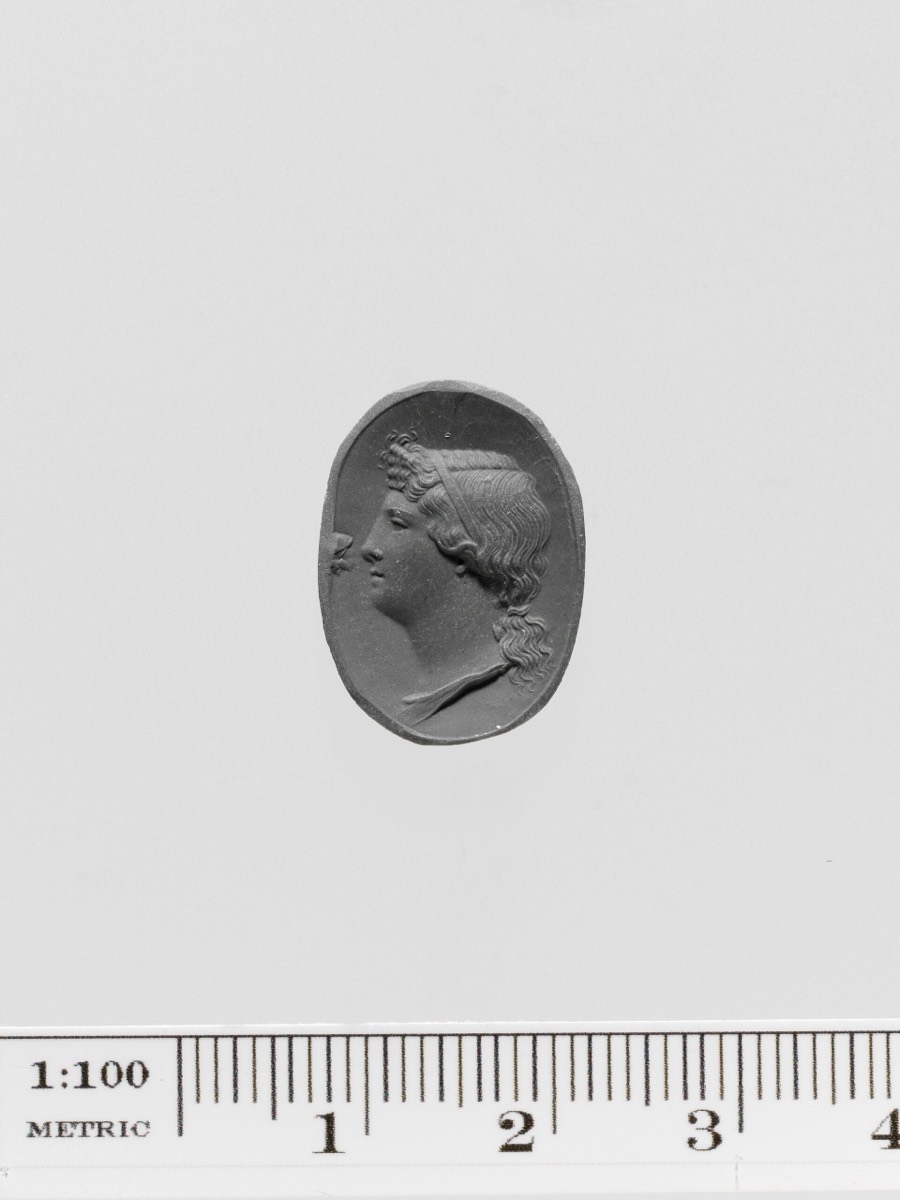
Chalcedony, blue
Milky blue to white. Turkey, Namibia, India.
History. The chalcedon of the Book of Revelation, third foundation of the New Jerusalem; the material of Roman cameos and Minoan seals.
Lore. Calm, the speaker’s stone.
In my instruments. Cabochons at the pivot.
Kits. The Twelve Stones.
Photo CC0.
Onyx
Black and white in flat bands; most commercial black onyx is dyed chalcedony. Brazil, India, Uruguay.
History. The Romans cut the great state cameos from it, the Gemma Augustea and the Grand Camée de France; the eleventh stone of the breastplate.
Lore. Strength, discipline, the stone of grief.
In my instruments. The black of a yes/no arc; the field of a board for scrying.
Kits. The Twelve Stones.
Photo Delphine Bruyere, CC BY-SA 3.0.

Jasper
Opaque red, yellow, green, brown; ‘picture’ jaspers show landscapes. Everywhere; Oregon, Madagascar, India.
History. The twelfth stone of the breastplate and the first of the New Jerusalem; the Minoans and Mycenaeans carved seals from it; a Roman ring-stone of red jasper is in the Metropolitan Museum.
Lore. Endurance, nurture, the stone of the long haul.
In my instruments. Inlay for red fields; stone planchettes.
Kits. The Twelve Stones; the Grounding Kit.
Photo CC0.

Bloodstone, heliotrope
Dark green spotted with red. India, Brazil, Scotland.
History. The medieval stone of Christ’s blood, said to have been formed at the foot of the cross; the Scots set it in pebble brooches with cairngorm; the birthstone of March.
Lore. Courage, the blood, the warrior’s stone.
In my instruments. Inlay; the pebble-brooch pattern in a board’s border.
Kits. The Twelve Stones.
Photo James St. John, CC BY 2.0.

Tiger’s eye
Golden-brown with a moving band of light, chatoyance. South Africa, Western Australia.
History. Rare and expensive until the South African deposits of the 1870s made it a Victorian favourite for cufflinks and cane-heads.
Lore. Courage, grounding, the eye that watches.
In my instruments. The pivot of the Percentage Board.
Kits. The Grounding Kit.
Photo Mauro Cateb, CC BY-SA 3.0.
Jade: nephrite and jadeite
Green, white, lavender; tougher than steel because of its felted fibres. Hotan, Burma, British Columbia, Guatemala.
History. Eight thousand years of Chinese reverence: the bi discs of Liangzhu, the burial suits of the Han princes sewn with gold wire, the cong and the cicada on the tongue of the dead. The Maya and Olmec valued it above gold. Confucius listed its eleven virtues.
Lore. Longevity, wisdom, protection in death; the stone that outlasts the dynasty.
In my instruments. A jade planchette for a client who has everything; bi-disc pivots.
Kits. By enquiry.
Photo Gary Todd, CC0.

Garnet, almandine
Deep red; twelve-sided crystals. India, Madagascar, Bohemia, Alaska.
History. The carbuncle of the Bible and Pliny; the Anglo-Saxon goldsmiths’ inlay of choice, cloisonné garnet on gold at Sutton Hoo; the Bohemian garnet jewellery of the Victorians.
Lore. The blood, passion, the root; the stone of the returning traveller.
In my instruments. The red band of the chakra board.
Kits. The Twelve Stones.
Photo Zbynek Burival, CC BY-SA 4.0.

Emerald
Green from chromium; almost always included, the ‘jardin’. Muzo, Colombia; Zambia; Egypt’s Cleopatra mines.
History. Mined in Egypt from 1500 BC; the Muzo emeralds of Colombia astonished the Spanish; the Mughals carved prayers into them. Pliny says nothing green is greener, and that rested eyes on it.
Lore. Love, sight, the heart, the stone of Venus.
In my instruments. The green band of the chakra board, when the client can afford it.
Kits. The Twelve Stones.
Photo Didier Descouens, CC BY-SA 3.0.
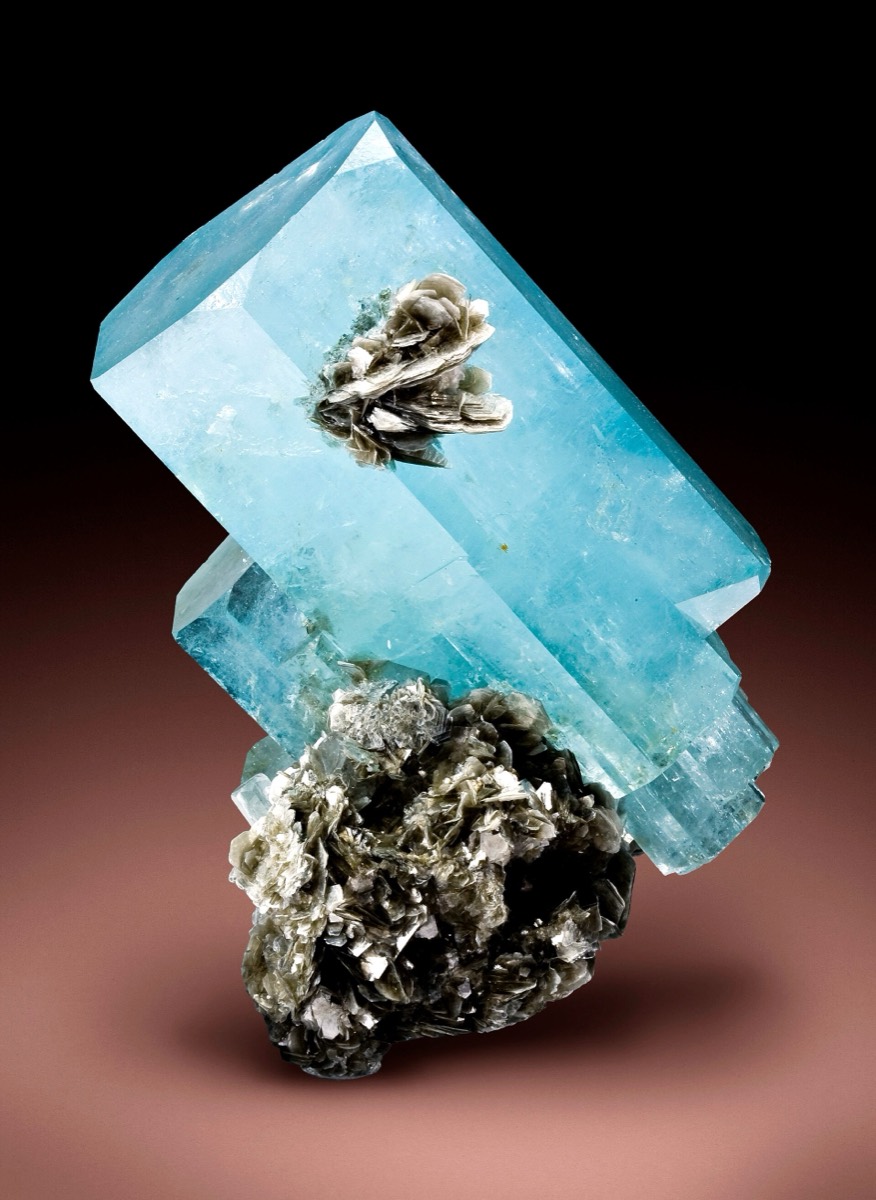
Aquamarine
Sea-blue beryl. Brazil, Pakistan, Madagascar.
History. Pliny’s sailors carried it; the Roman beryl was cut into the first lenses; the largest cut gem in the Smithsonian is one.
Lore. Courage at sea, the throat, calm.
In my instruments. The blue band of the chakra board.
Kits. By enquiry.
Photo Robert M. Lavinsky, CC BY-SA 3.0.
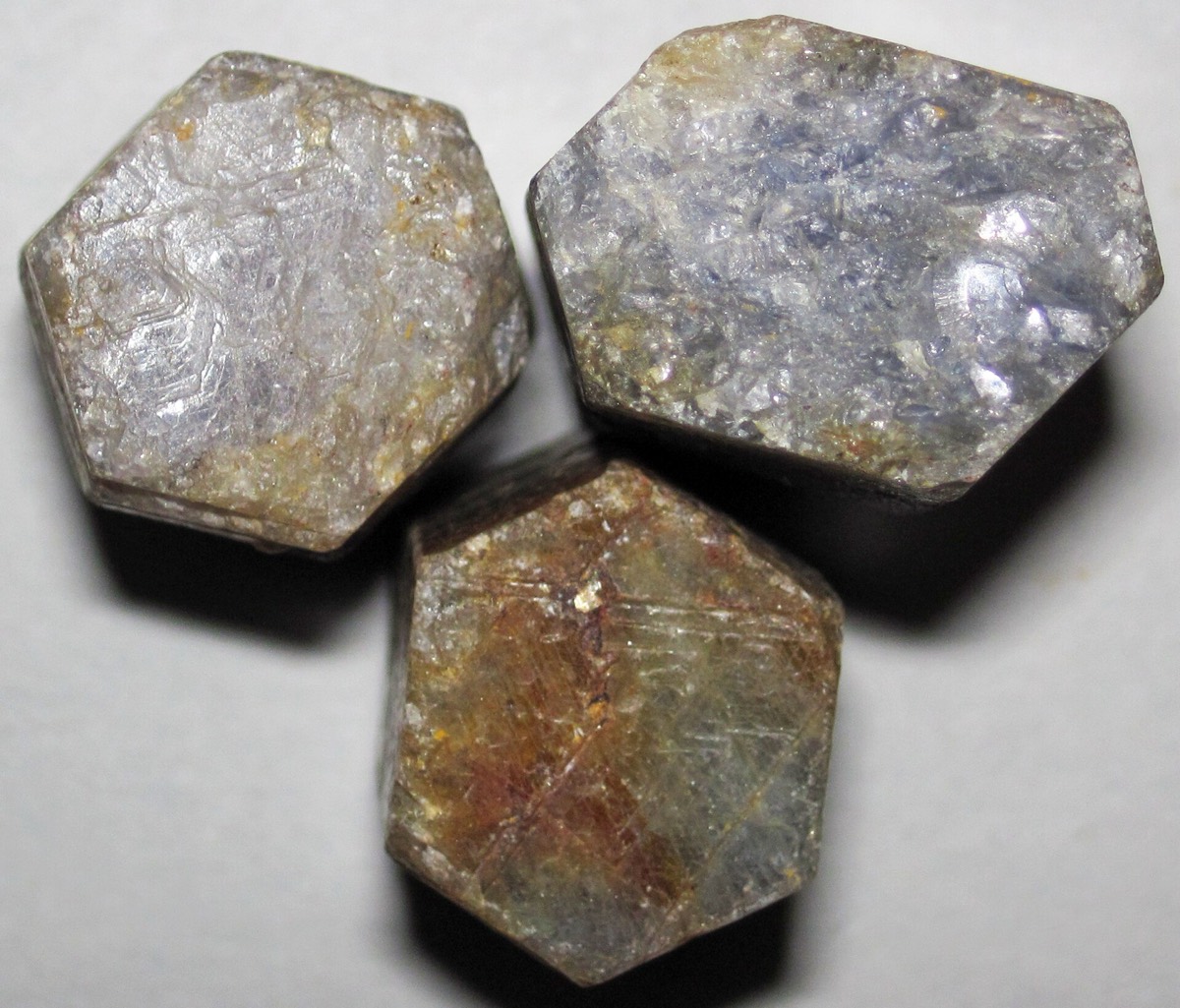
Ruby
Red corundum; fluoresces red, which is why a good ruby seems lit from inside. Burma, Mozambique, Thailand.
History. The ratnaraj, ‘king of gems’, of Sanskrit; the Black Prince’s ‘ruby’ in the British crown is a spinel, which tells you how prized the real thing was. The first laser, in 1960, was a ruby rod.
Lore. Passion, protection, sovereignty.
In my instruments. A cabochon at the pivot of a board built for one person.
Kits. By enquiry.
Photo James St. John, CC BY 2.0.

Sapphire
Blue corundum; every colour but red, which is ruby. Sri Lanka, Kashmir, Madagascar, Montana.
History. The sapphire of the ancients was probably lapis; the true stone was the bishops’ stone of the Middle Ages and the stone of the ecclesiastical ring; a synthetic sapphire window is on your watch.
Lore. Wisdom, fidelity, the heavens.
In my instruments. The blue of the brow band; a sapphire glass over the lens for a client who wants one.
Kits. By enquiry.
Photo Robert M. Lavinsky, CC BY-SA 3.0.

Topaz
Colourless, golden, blue; most blue is irradiated. Brazil, Pakistan, the Urals.
History. The topazos of Pliny was peridot from an island in the Red Sea; the Braganza ‘diamond’ of the Portuguese crown was a topaz; the second stone of the breastplate.
Lore. The solar, clarity, generosity.
In my instruments. Colourless points as indices on a dial.
Kits. The Twelve Stones.
Photo Marie-Lan Taÿ Pamart, CC BY 4.0.

Peridot, olivine
Olive green; the gem of the mantle, and of meteorites. Zabargad in the Red Sea, Arizona, Pakistan; the pallasite meteorites.
History. Mined on Zabargad for the pharaohs, it was the ancient topaz; the Crusaders brought it home as emerald; it falls from the sky in pallasites.
Lore. Renewal, the release of old patterns.
In my instruments. The green of a heart band.
Kits. By enquiry.
Photo Steve Jurvetson, CC BY 2.0.

Opal
Play of colour from silica spheres stacked like oranges, diffracting light. Coober Pedy and Lightning Ridge, Australia; Ethiopia; Mexico.
History. Pliny’s favourite; the Roman senator Nonius chose exile over giving up his; Scott’s Anne of Geierstein started the Victorian rumour that it was unlucky, which the diamond trade was happy to encourage.
Lore. Inspiration, the whole spectrum, the stone of the artist.
In my instruments. Set at the pivot under a lens, where the colour moves as the sitter moves.
Kits. By enquiry.
Photo Bahudhara, CC BY-SA 3.0.

Kyanite
Blue blades; the only common stone with two hardnesses. Brazil, Nepal, Switzerland.
History. Named for the Greek for blue in 1789; a refractory used in spark plugs, which makes it the second stone on this page with an electrical job.
Lore. Alignment, the stone said never to hold negativity.
In my instruments. Blades inlaid as the rays of a fan chart.
Kits. The Board-Maker’s Set.
Photo James St. John, CC BY 2.0.

Celestine
Pale sky-blue. Madagascar, Ohio, Sicily.
History. Named for the sky in 1798; the source of strontium, which burns red in fireworks.
Lore. The angelic, peace, the higher voice.
In my instruments. Small inlays only.
Kits. By enquiry.
Photo Rama, CC BY-SA 3.0 fr.

Apatite
Blue, green, yellow; ‘the deceiver’, because it looks like other stones. Brazil, Madagascar, Mexico.
History. Named in 1786 from the Greek for deceit; the mineral your teeth and bones are made of.
Lore. Manifestation, the intellect, appetite.
In my instruments. Inlay.
Kits. By enquiry.
Photo Masha Milshina, CC BY 4.0.
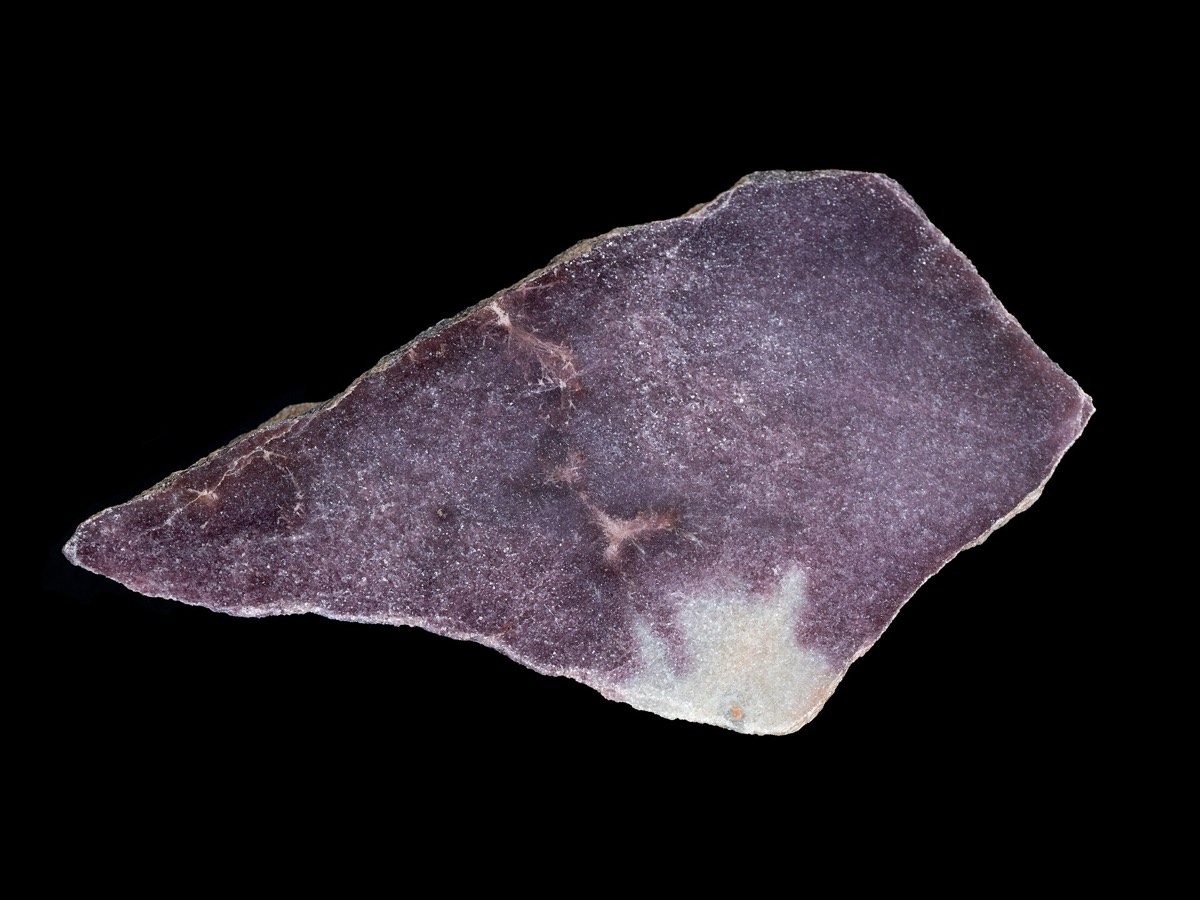
Lepidolite, lithium mica
Lilac; a mica, and the ore of lithium. Brazil, Czechia, California.
History. The stone from which lithium, the element of the mood-stabiliser and the battery, is refined; the lilac mica the Victorians called lithia mica.
Lore. Calm, the stone of the anxious; a claim that, for once, has a chemistry behind it.
In my instruments. Sheets as the lining of an Ossuary.
Kits. The Sitter’s Kit.
Photo Zbynek Burival, CC BY-SA 4.0.
Muscovite, mica
Silvery, transparent in thin sheets that peel like pages. India, Brazil, Russia; the ‘Muscovy glass’ of the tsars’ windows.
History. Window-glass in Russia before glass, the isinglass of stove doors, the dielectric of every early capacitor and radio; the mineral laid in sheets in the pyramids of Teotihuacan, which is the subject of a section of its own on this page.
Lore. Insulation, the stone that reflects; a mirror for the unquiet.
In my instruments. Sheets under a board’s pivot, for the reason the section below gives.
Kits. The Piezo Kit includes a sheet, for what it does not do.
Photo Robert M. Lavinsky, CC BY-SA 3.0.

Amber
Golden, with insects forty million years dead inside. The Baltic, Dominica, Burma.
History. Elektron to the Greeks, who rubbed it and found it drew straw: the word electricity is the word amber. Traded from the Baltic to Mycenae before 1500 BC; the Amber Room of the tsars; the Mesolithic amulets of Denmark are the oldest worked jewels in northern Europe.
Lore. Warmth, the sun stored, the stone of memory.
In my instruments. Beads at the top of a pendulum chain; the amber that is rubbed to show the first electricity anyone ever saw.
Kits. The Piezo Kit, for the demonstration of the older effect.
Photo RealGatba, CC BY-SA 4.0.

Jet
Black, light, warm to the touch; takes a high polish. Whitby, Asturias.
History. The Romans mined it at Whitby; the Victorians made an industry of it after Albert died and the Queen would wear nothing else; rubbed, it too draws straw, and Pliny knew that.
Lore. Mourning, protection, the stone of the widow.
In my instruments. Beads and pendulum bobs for a mourning sitting.
Kits. The Sitter’s Kit, on request.
Photo Birmingham Museums Trust, Teresa Gilmore, 2012-11-05 14:51:34, CC BY-SA 2.0.

Shungite
Black, metallic; two billion years old. Karelia, Russia.
History. Peter the Great built a spa on its spring water and had his soldiers carry it to purify theirs; it conducts electricity, which almost no stone does, and it contains fullerenes, which almost nothing does.
Lore. Shielding, especially from electromagnetic fields; a claim that at least concerns a material that conducts.
In my instruments. A disk under the board as a ground.
Kits. The Grounding Kit.
Photo James St. John, CC BY 2.0.
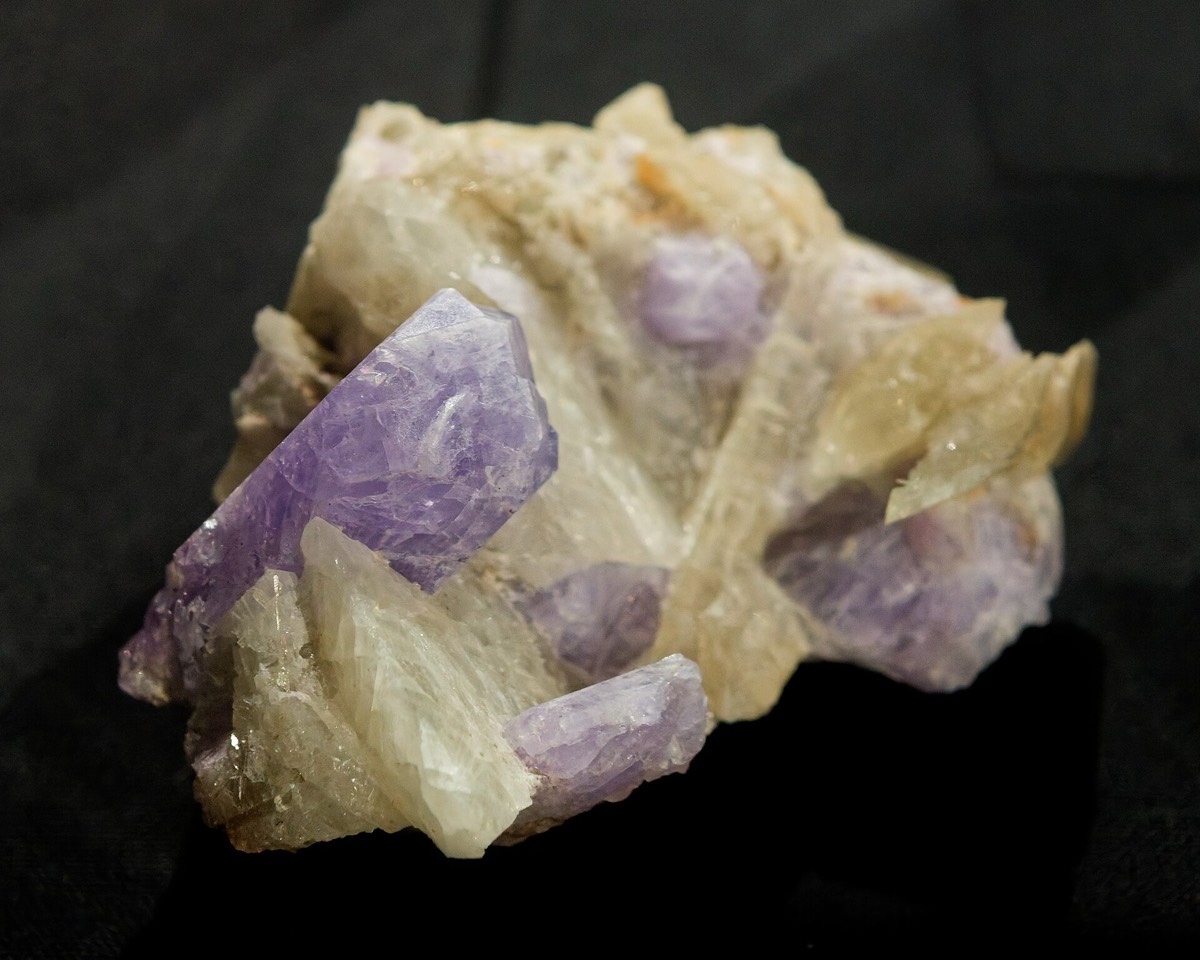
Sodalite
Royal blue with white veins; lapis without the gold. Ontario, Brazil, Afghanistan.
History. Found in Greenland in 1811 and mined in Ontario after Princess Margaret admired it in 1901, hence ‘Princess Blue’.
Lore. Logic, truth, the calm intellect.
In my instruments. Inlay where lapis would be too costly.
Kits. By enquiry.
Photo Marie-Lan Taÿ Pamart, CC BY 4.0.

Charoite
Swirling purple; fluoresces. The Chara river, Siberia, and nowhere else.
History. Described only in 1978; a stone the whole world has known for less than fifty years.
Lore. Transformation, the stone of the newest lore.
In my instruments. Inlay.
Kits. By enquiry.
Photo Dr Anatoly, CC BY 4.0.
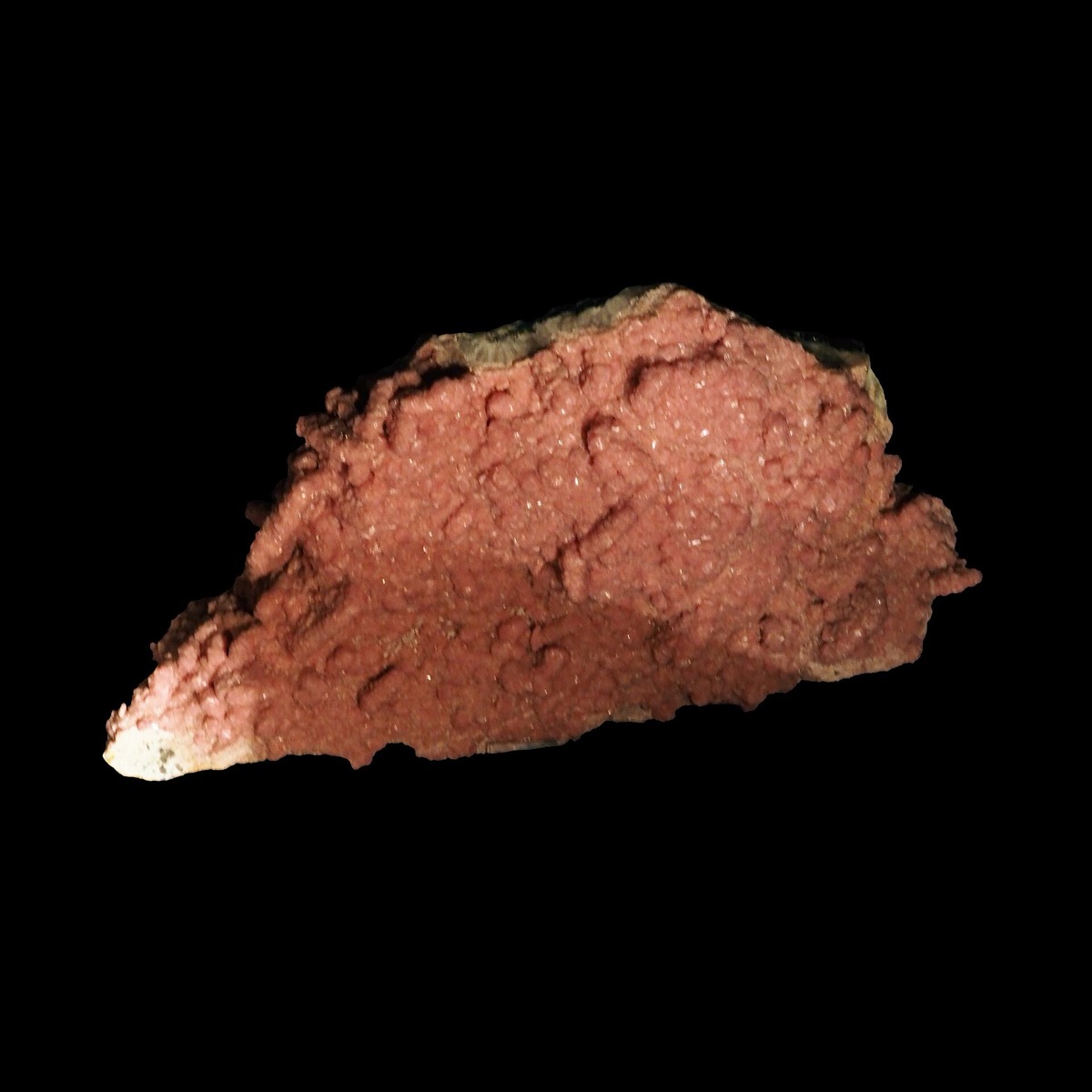
Rhodochrosite
Rose-pink banded. Argentina, Colorado, Peru.
History. The Inca rose; the Incas said it was the blood of their kings turned to stone; Colorado’s state mineral.
Lore. The heart, compassion, self-love.
In my instruments. Inlay in the heart band.
Kits. By enquiry.
Photo Rama, CC BY-SA 3.0 fr.

Ametrine
Violet and gold in one stone. Anahí, Bolivia, almost alone.
History. Given, the story goes, to a conquistador as a dowry by an Ayoreo princess in the 1600s; lost, and rediscovered in the 1970s.
Lore. The joining of the crown and the solar; balance.
In my instruments. Pendulum bobs.
Kits. The Pendulum Seven.
Photo No machine-readable author provided. Anakin~commonswiki assumed (based on copyri, CC BY-SA 3.0.

Libyan desert glass
Yellow-green; formed by a meteorite airburst 29 million years ago. The Great Sand Sea, Egypt and Libya.
History. The scarab at the centre of Tutankhamun’s pectoral is carved from it; the pharaoh wore a stone made by an explosion in the sky.
Lore. The cosmic, the stone that fell.
In my instruments. By enquiry, as a pendulum.
Kits. By enquiry.
Photo James St. John, CC BY 2.0.
VIIn My Instruments
Every board, planchette, pendulum, and dial I make has stone in it, and the stone is not there for the catalogue photograph. It is there because of the three reasons in the first section, and the third of them deserves spelling out.
A talking board is worked by the hands. The sitters press, the planchette moves, the pressure shifts, and the answer is read where the movement stops. Under the pivot of every board I make, the point on which the whole geometry of the chart is centred, I set a stone, and on the Vesica and Percentage boards that stone is quartz or a quartz cousin, tiger’s eye. That is the one place on the table where the sitters’ weight is concentrated, and quartz under weight does the one thing no other material on the table does: it generates a charge. It is a small charge. It is not a power supply, and I will not tell you it is. But it is real, it is measurable, it has been measurable since 1880, and the practice I serve has always held that the board is more than wood. For a hundred and seventy years people have set quartz on their séance tables because they believed it did something. I set it there because I know that it does, and I am honest about how little.
The rest is craft and history. Lapis at the pivot because it was the stone of the sky in Sumer and Egypt and its pyrite flecks are the stars. Malachite in the bands because it is the first stone from which metal was made. Black tourmaline at the corners because every tradition since the German miners has put it at the door. Amethyst for the pendulum because Pliny said it kept the head clear, and the head is what a pendulum consults. Obsidian for the scrying mirror because the Aztecs and Dr Dee used nothing else. Hematite for weight, jet for mourning, amber at the top of the chain because it is the stone the word electricity was named for. And selenite across the board between questions, because whether or not it clears anything, the act of laying it there clears the sitters, and that is what a ceremony is.

The Osiris Board
The board I am making now is the one this whole page has been leading to. The Osiris Board is a communications board built as the Egyptians built the things they meant to last: a field of lapis, the sky of Sumer and of the mask of Tutankhamun, and on it three figures in inlaid stone. Osiris, lord of the dead and judge of the weighing of the heart, in malachite, because the Egyptians painted him green, the colour of the reed that comes back every spring, and because malachite is the stone from which the first metal was ever made. Isis, who gathered his body and made him whole, in lapis of a deeper cut than the field, with her throne-crown gilded. Horus, their son, the falcon, the living king, in carnelian, the stone the Egyptians laid at the throat of the dead, with gold at the beak and eye. Around them, in a frieze of gilding, the signs of the Book of the Dead: the ankh, the djed pillar of Osiris’s spine, the feather of Ma’at against which the heart is weighed, the wedjat eye, the scarab, the was sceptre; and at the centre, where the planchette rests and the sitters’ weight falls, the wedjat eye with a quartz point beneath it, so that the board’s heart is the one stone on the table that answers pressure with a charge. The alphabet runs in two arcs of gold. The frame is gilded on gesso as a coffin was.
It is the most demanding board I have attempted: the inlay alone is weeks, the gilding is the old water-gilding on bole, and the stones are cut here from the lapis, malachite, and carnelian described in the lexicon above. It will be made in a small numbered edition, each with its planchette in matching stone and a book of the spells reproduced on the frieze, with their translations. I do not describe it further because the drawing below says it, and because a thing like this should be seen before it is bought. Enquire and I will send the photographs of the piece in progress.
Then there is the planchette itself, which I cut in stone as well as wood: blue pearl granite, which is a third quartz and glitters with feldspar, marble, serpentine, obsidian, and by arrangement jade. A stone planchette is the heaviest and quietest pointer there is, and a granite one, pressed under four hands, is a piezoelectric planchette, which nobody else on earth makes or has thought to. My sister sites describe the instruments: the boards and pendulums at Pendulum Boards, the planchettes at Planchettes, Professor Hare’s dial plates at Spiritoscopes, the hand of bone at Skeletal Planchettes, and the whole history of what they are for at Talk to the Dead. This page is the stone in all of them.